Tariffs take a toll despite easing trade hostilities
Tariffs and import-tax shifts reshape global tradeflow as US imports fall and China redirects exports to Asia and Europe.
Following Donald Trump’s visit to Asia in late October, Washington and Beijing struck a deal that cuts the US fentanyl-related tariff share to 10% from 20%, suspends the expanded sanctions list, extends Section 301 exclusions, and maintains the pause on 24ppts of reciprocal tariffs. On China’s side, rare earth restrictions will be delayed and soybean purchases resumed. Both parties also agreed to halt shipping levies that took effect in October. The reduction in tariff and non-tariff barriers supports an upward revision to our China GDP forecast for 2026 to 4.3% from 4.0%.
The surge in US imports earlier this year, as firms front-loaded ahead of tariffs, is now unwinding. Goods imports fell 7% m/m in August and are almost 10% below the pre-tariff trend. Tariffs will continue to hinder US imports, resulting in a 6.4% decline through 2026.
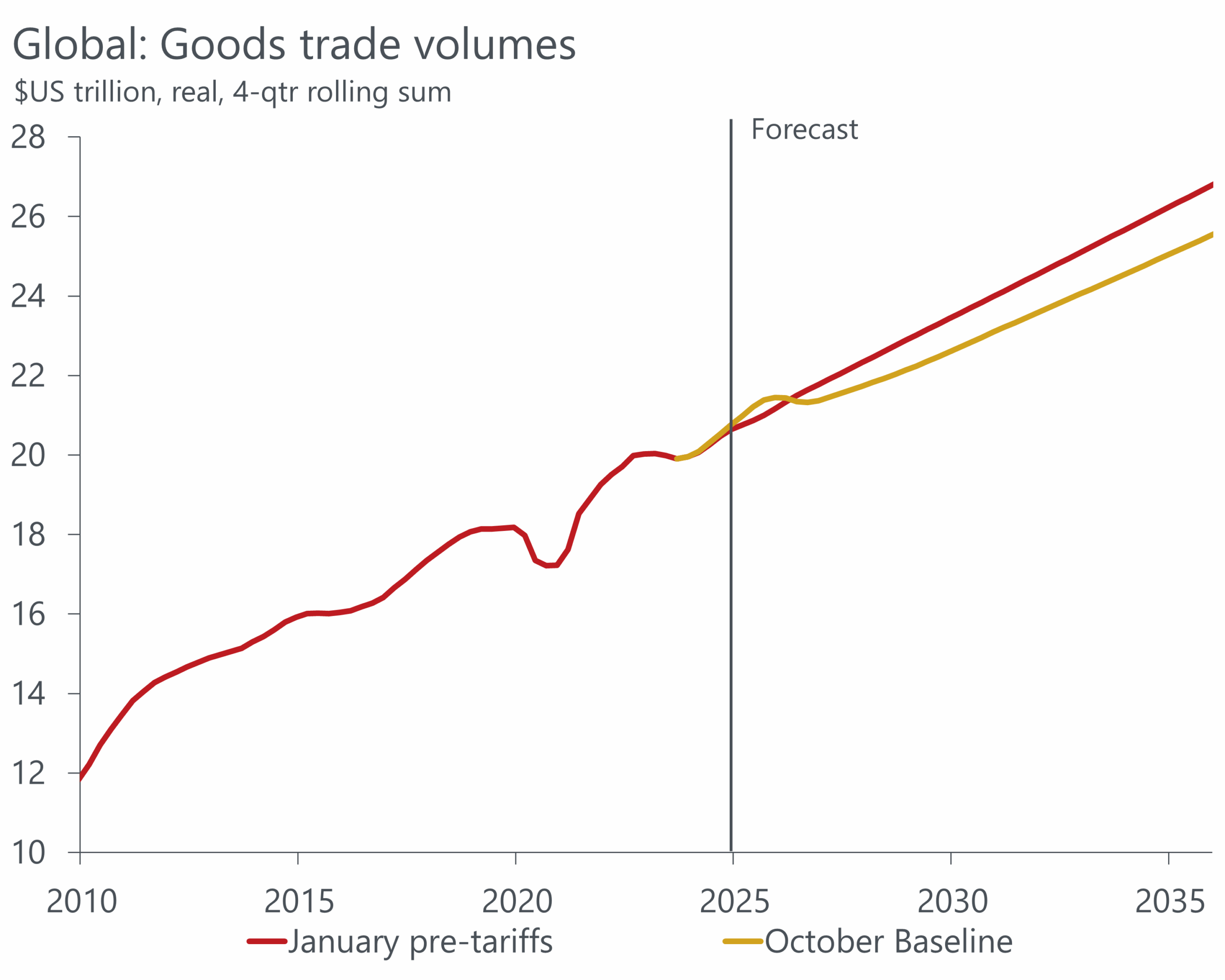
◼ After a strong first half in 2025, global trade volumes are set to decline 0.3% in 2026, with nominal trade growth slowing to 1.6% from 4.4% this year. Despite lower tariffs, China’s exports to the US are set to drop 18% by 2026, reinforcing the structural pivot of Chinese trade away from the US and toward ASEAN and Europe.
◼ Containerised trade is set to grow more than 2% annually as production relocates across Asia and regional supply chains deepen. In contrast, dry and liquid bulk shipments face softer demand, as weaker industrial activity reduces flows of oil, coal, and metals. This will be partly offset by rising LNG and precious metal exports tied to the AI and clean energy booms.
◼ Our latest trade forecasts were released on October 29. These can be accessed through the TradePrism Dashboard or Snowflake Marketplace.