US chip exports unlikely to derail China’s local production push
US chip exports are back on the table. China’s quest for semiconductor self-sufficiency is not slowing down.
The US government’s decision to allow exports of Nvidia’s H200 chips to China is unlikely to deter China’s efforts in achieving chip self-sufficiency.
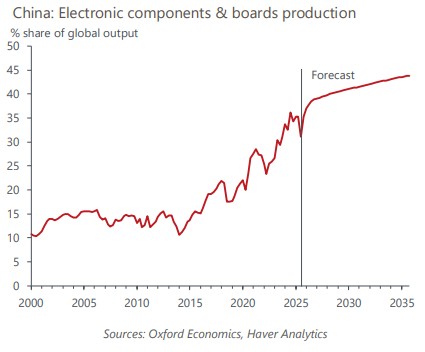
Ever since the US started restricting China’s access to its chips in 2019, China has accelerated its longstanding efforts to produce cutting-edge chips domestically, supported by government subsidies and top-down guidance. Given their rising strategic importance, on both the economic and defence fronts, we believe China will continue prioritising its pursuit of chip self-sufficiency.
Despite rapid progress, Chinese chips still lag US ones in performance due to weaknesses in parts of its tech supply chain, such as in lithography capabilities. Allowing access to advanced US chips would help bridge this gap. That said, access alone is unlikely to be a gamechanger.
Although the chip imports to China are likely to have an insignificant impact on Chinese chip production, they should provide a boost to Taiwan, as TSMC produces these chips for Nvidia. If China allows full imports, it could potentially boost Taiwan’s electronic components and boards production by 5.6% this year. Meanwhile, high uncertainty and the fast-changing bilateral relationship between the US and China mean supply-side volatility could rise.