
Research Briefing
| Nov 7, 2022
Where next for BoJ’s yield curve control?
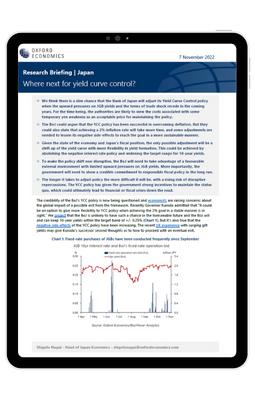
The credibility of the BoJ’s YCC policy is now being questioned and economists are raising concerns about the global impact of a possible exit from the framework. Recently Governor Kuroda admitted that “it could be an option to give more flexibility to YCC policy when achieving the 2% goal in a stable manner is in sight.” We project that the BoJ is unlikely to have such a chance in the foreseeable future and the BoJ will and can keep 10-year yields within the target band of +/- 0.25%. But it’s also true that the negative side-effects of the YCC policy have been increasing. The recent UK experience with surging gilt yields may give Kuroda’s successor second thoughts as to how to proceed with an eventual exit.
What you will learn:
- We think there is a slim chance that the Bank of Japan will adjust its Yield Curve Control policy when the upward pressures on JGB yields and the terms of trade shock recede in the coming years.
- Given the state of the economy and Japan’s fiscal position, the only possible adjustment will be a shift up of the yield curve with more flexibility in yield formation. This could be achieved by abolishing the negative interest rate policy and widening the target range for 10-year yields.
- The longer it takes to adjust policy the more difficult it will be, with a rising risk of disruptive repercussions. The YCC policy has given the government strong incentives to maintain the status quo, which could ultimately lead to financial or fiscal crises down the road.