
Research Briefing
| Aug 3, 2023
Long-term productivity growth drives CEE city economies
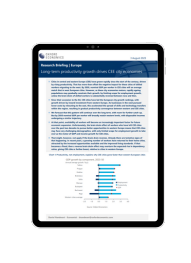
Cities in central and eastern Europe (CEE) have grown rapidly since the start of the century, driven by rising productivity. That has more than offset the negative impact for these cities of skilled workers migrating to the west. By 2050, nominal GDP per worker in CEE cities will on average match that in west European cities.
What you will learn:
- Since their accession to the EU, CEE cities have led the European city growth rankings, with growth driven by inward investment from western Europe.
- We forecast that this pattern will continue over the long term, with room for further catch-up. But by 2050 nominal GDP per worker will broadly match western levels, with disposable incomes undergoing a similar trajectory.
- At that point, availability of workers will become an increasingly important factor for future economic expansion. Unfortunately, the brain drain effect of workers who have left CEE cities over the past two decades to pursue better opportunities in western Europe means that CEE cities may face very challenging demographics, with only limited scope for employment growth to take over as the motor of GDP and income growth for CEE cities.
- That might, however, not apply if the brain drain reverses. Already there are tentative signs of that happening. In recent years, a growing number of workers have returned to their home cities, attracted by the increased opportunities available and the improved living standards.