
Wheat prices soften in 2024, but risks tilted to the upside


Households have been grappling with sharply higher food bills over the past couple of years because of rocketing agricultural commodity prices, which have contributed to sharply higher inflation globally. Key amongst these agricultural commodities is the price of wheat, which is especially important in much of the developed world.
Wheat prices hit a record high in May 2022 following Russia’s invasion of Ukraine earlier that year. The two countries accounted for around 30% of global wheat exports at the time and concerns about prospects for supply disruption boosted prices for wheat, as well as other agricultural commodities Ukraine and Russia are heavily involved in such as sunflower oil and corn. At the same time, harvests in the US, another important producer of wheat, disappointed.
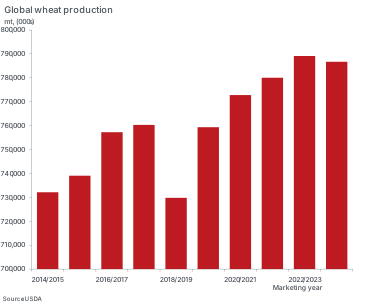
The wheat market looks quite different now. Soaring prices in 2022 have encouraged farmers to expand production. Moreover, despite remaining at elevated levels, the fallback in fertiliser prices since H2 2022 may also have encouraged usage, in turn supporting yields. In addition, favourable weather conditions have helped production rebound in Argentina, a key wheat exporter, from its drought-hit slump in the prior year. As a result of these factors, according to the US Department of Agriculture, global harvests in the 2023/24 marketing year are set to be robust, and only marginally lower than their record levels of the prior year (Fig. 1).
Another factor that has pushed wheat prices lower is the recovery of Ukrainian and Russian wheat exports. Official data show that Russian wheat stocks are at a record level and exports up strongly compared to two years ago, keeping the global market well supplied whilst crowding out exports from other suppliers such as the US and EU. Moreover, despite the end of the Black Sea Grain deal in July last year, Ukraine has managed to maintain a steady stream of wheat exports.
Our base case for wheat is for a double-digit year-on-year decline this year. We think prices are near a floor and will begin rising through H2 2024. Bearish sentiment in the market has meant many buyers have held back, waiting for the market to hit a bottom before buying and this should help support a recovery in prices later in the year. The USDA’s forecasts also suggest stocks at the end of 2023/24 are at their lowest level in eight years which should support a rise in prices.
However, risks are tilted to the upside. The recent attacks by Russia on Ukrainian port and storage facilities act as a reminder that an emboldened President Putin could still disrupt the global wheat market, whether by flooding the global market or by hindering supply. In addition, poor weather conditions in Europe and the US could hurt production prospects going forward.
Author

Tags: