Research Briefing
| Feb 19, 2025
What the rise in NICs means for the UK labour market
The April increase in employers’ national insurance contributions will weaken the UK labour market, increasing unemployment. Sectors with the greatest reliance on lower paying roles, such as hospitality, art and recreation, and wholesale and retail, look highly vulnerable to job losses.
What you will learn:
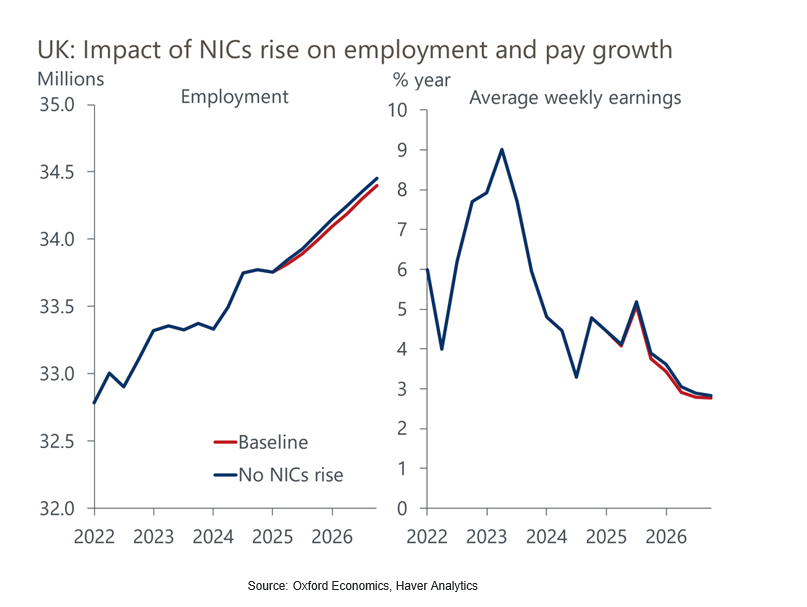
- To quantify the potential effects, we modelled the increase in employers’ NICs. The results suggest the hike will cut employment by 55,000 and pay growth by 0.2ppts, and raise the unemployment rate by 0.2ppts. But we think the secondary threshold cut and simultaneous increase in the national living wage, at a time when corporate profitability is already weak, could yield nonlinear results. So the impact on jobs could be bigger than our modelling indicates.
- This year’s large increase in labour costs is the latest in a series of cost pressures that have already pushed corporate profitability to a 23-year low. We’re concerned about the ability and willingness of firms to absorb extra cost rises, particularly against a backdrop of soft demand.
- The large cut in the point at which firms start paying NICs will raise the cost of lower paid roles significantly, particularly given the national living wage will also rise sharply. We calculate the total cost of salary and NICs for a full-time worker on the living wage will increase by 44% between 2021-2025.