Research Briefing
| Feb 20, 2025
European pharma, high-tech, and machinery most exposed to US trade war
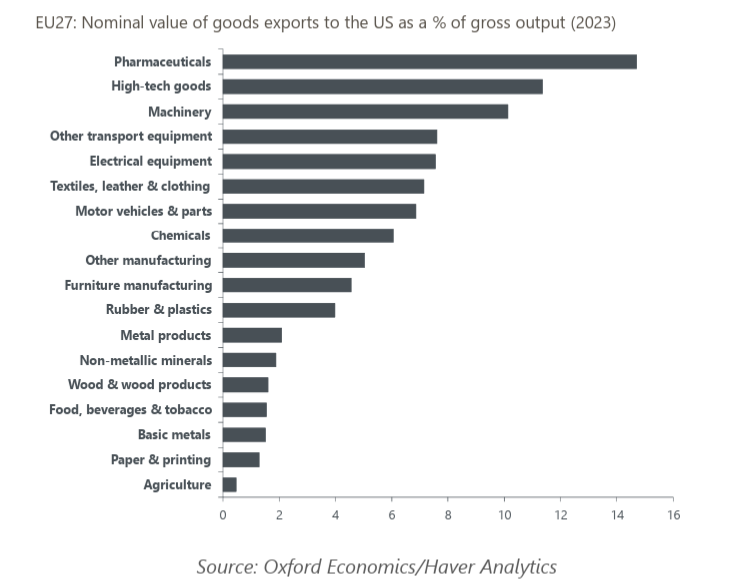
European pharmaceuticals, machinery, and high-tech goods are heavily exported to the US, making them vulnerable to across-the-board US tariffs. However, European pharmaceuticals make up a sizeable share of total US consumption of this product, so the imposition of tariffs on the sector would be harmful to US households and businesses.
What you will learn:
- Neither the EU nor the US have much supply chain reliance on one another. This may make tariffs more justifiable from President Trump’s perspective and embolden the EU to retaliate against them. Tariffs on the EU would only have a minimal impact on US industrial production and final producer prices through higher input costs. Our modelling shows that no sector would see more than 1% increases in producer prices as a result of 25% tariffs on all EU goods.
- Denmark, which may be singled out by President Trump if the country refuses to sell Greenland, is potentially vulnerable to tariffs on pharmaceuticals because of the success of its new weight loss drug products. While exports to the US account for a small proportion of recorded total pharmaceutical sales in the export data, we think that tariffs could deliver a blow to the sector in the short term.
- We see potential for the EU to offer to increase their imports of US LNG to head off tariffs. Despite an expected decline in overall EU natural gas demand, we estimate that by 2030 imports could increase by 18% if US LNG regains its late-2023 market share.