
Research Briefing | Feb 28, 2025

Defence spending could still pose a fiscal challenge

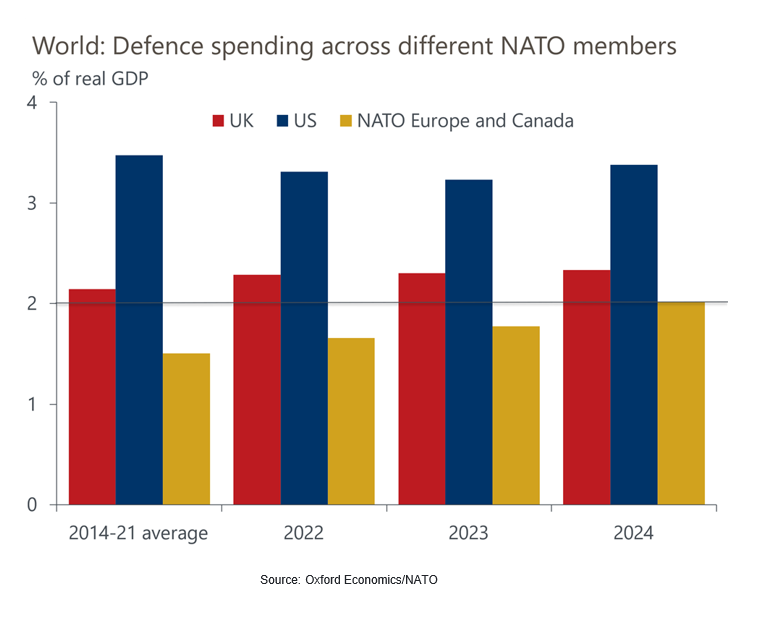
We think the UK’s commitment to fund an increase in defence spending to 2.5% of GDP by cutting the overseas aid budget will not provide a substantial boost to growth.

What you will learn:

  • If in cutting overseas aid spending, the government is reducing day-to-day spending to fund defence spending that will be spread across both current spending and capex then itĀ couldĀ help the Chancellor to preserve a little fiscal space at the Spring Forecast on March 26.
  • This may not be the final word on defence spending since the NATO defence spending target could be lifted to at least 3% of GDP at its summit later this year.
  • Given Labour’s commitment to its “non-negotiable” fiscal rules, defence spending could become a fiscal constraint on the current government.
Tags: Economic GrowthFiscal policyPoliticsUK
Back to Resource Hub

Related Content

The UK’s fiscal adjustment is at risk of failure

The UK’s fiscal adjustment is at risk of failure

The UK is planning one of the largest fiscal consolidations of any advanced economy over the next two years. We expect it to result in much weaker GDP growth than the Office for Budget Responsibility forecasts and think the government's balance sheet is still likely to deteriorate.
UK Labour market data woes show the importance of nowcasts

UK Labour market data woes show the importance of nowcasts

We think that valid concerns about the quality of data from the UK's Labour Force Survey (LFS) make it virtually unusable at present. Considering it will likely take another two years to fix the problems, this poses a major headache for policymakers and economists alike.
Eurozone: tariff threat weighs on the outlook

Eurozone: tariff threat weighs on the outlook

The eurozone economy remains stuck in a low gear and we have recently cut our growth forecasts as a result of our expectation of US tariffs on European imports being imposed over the coming months. While we still think the Eurozone economy is more likely to continue to grow at weak pace rather than fall into recession, the list of risk factors – ranging from more cautious households and firms to a full-blown trade war – remains long. In this webinar, we will discuss both the recent changes to our baseline and the risks around it, as well as their consequences for the fiscal and monetary policy outlook.
Will eurozone tariffs be the straw to break the labour market’s back?

Will eurozone tariffs be the straw to break the labour market’s back?

WeĀ have revised ourĀ EurozoneĀ labour marketĀ forecastsĀ to incorporate theĀ impact ofĀ US tariffs,Ā andĀ nowĀ expect employmentĀ growthĀ to come to aĀ nearĀ standstill this year.Ā Although risks to the labour marketĀ areĀ tilted to the downside,Ā variousĀ indicators continue toĀ suggest thatĀ aĀ serious downturnĀ will be averted.