
Research Briefing
| Nov 18, 2021
ASEAN growth tracker shows growth bottoming out
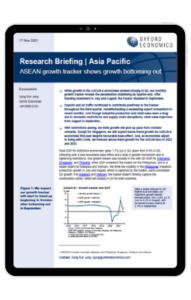
Real GDP for ASEAN-6 economies1 grew 1.7% y/y in Q3, down from 9.3% in Q2, reflecting both a less favourable base effect and a drop in growth momentum due to tightening restrictions. Our growth tracker was broadly in line with Q3 GDP for Indonesia, Singapore, and Thailand, while GDP undershot the tracker for the Philippines, and to a lesser extent for Malaysia and Vietnam.
What you will learn from this report:
- While growth in the ASEAN-6 economies slowed sharply in Q3, our monthly growth tracker reveals the deceleration stabilising by quarter-end. After trending downward in July and August, the tracker steadied in September.
- Exports and air traffic continued to contribute positively to the tracker throughout the third quarter, notwithstanding a weakening export momentum in recent months. And though industrial production and retail sales were a drag due to domestic restrictions and supply chain disruptions, retail sales improved from August to September.
- With restrictions easing, we think growth will pick up pace from October onwards. Except for Singapore, we still expect below-trend growth for ASEAN-6 economies this year despite favourable base effect. And, as economies adjust to living with Covid, we forecast above-trend growth for the ASEAN bloc in 2022 and 2023..