Research Briefing
| Jan 24, 2024
Asian powerhouses continue to climb the global rankings
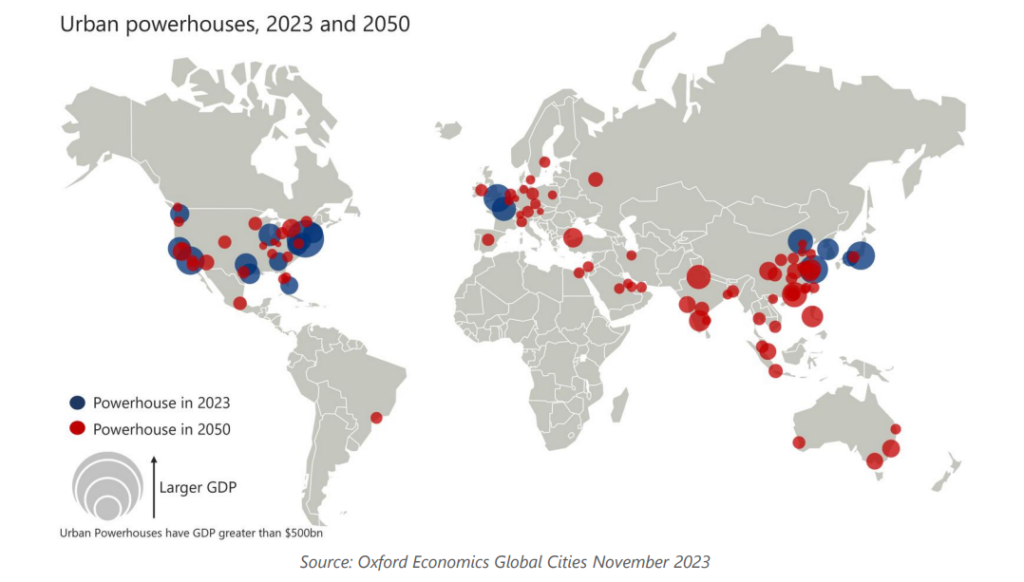
Cities dominate the global economy. Today, 19 cities have achieved urban economic powerhouse status, with annual GDP greater than $500 billion. These are predominantly in the US, but over the coming decades, the urban landscape will shift as large and fast-growing cities across Asia emerge to challenge the current hierarchy.
What you will learn:
- The largest city in the world today is New York, which generated GDP of $2.3 trillion in 2023—more than the entire Canadian economy. The US financial capital is in a league of its own on the global stage, but the rise of the Chinese economy has already seen Shanghai climb the global rankings. By 2050, we expect Shanghai to overtake Tokyo, Los Angeles, and London to become the world’s second largest urban economy.
- Rapid economic expansion will also continue in southern and southeast Asia. This will be supported by a growing consumer base and will benefit from new market opportunities in low-value manufacturing, which Chinese cities are now diversifying away from. Delhi is the standout performer, but Manila and Bengaluru are also set to increase their presence on the global stage.
- While Asian cities will dominate the powerhouse ranking in 2050, at least one city in every global region will reach this landmark. In Europe, the central and eastern European cities of Prague and Warsaw will experience the most rapid development, while Mexico City and São Paolo will continue to assert their dominance in Latin America.