Ungated Post|2 May 2018

The impact of the European steel industry on the EU economy
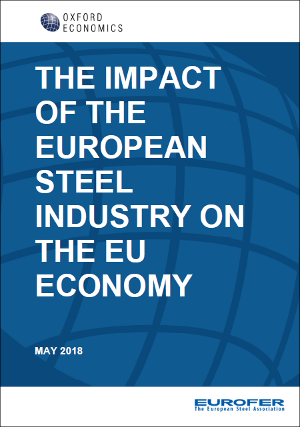
The impact of the European steel industry on the EU economy

Steel manufacturers have a significant presence in 22 of the 28 EU countries, directly employing 320,000 workers and making a €20.7 contribution to GDP. But much more significantly, they purchase €103 billion worth of supplies from other industries, supporting a large amount of ‘indirect’ GDP and jobs in their EU-based supply chain. Taking into account activity ‘induced’ by the wage-funded spending of those working in the industry and in its supply chain too, some 2.5 million jobs are supported in total through the direct, indirect and induced channels of economic impact. This generates €128 billion of GDP across the EU-28, which is more than the GDP of the state of Berlin. The so-called ‘multipliers’ for GDP and jobs – the ratios of total activity to direct activity alone – are therefore unusually high, at 6.2 and 7.7 respectively.

Read the full report.

Oxford Economics’ team is expert at applying advanced economic tools that provide valuable insights into today’s most pressing business, financial, and policy issues.

To find out more about our capabilities, contact:

Americas
Diantha Redd
+1 (646) 503 3052
Email

Asia Pacific
Peter Suomi
+65 6850 0110
Email

EMEA
Aoife Pearson
+44 (0)203 910 8054
Email
  • Share:

Related Services

Socioeconomic Impact of DP World in Senegal

Socioeconomic Impact of DP World in Senegal

Oxford Economics Africa conducted a socioeconomic impact assessment of DP World Dakar covering 2022–2024. We assessed DP World’s operations in Senegal, quantifying its economic footprint, the activity supported through trade facilitation and evaluating social and environmental outcomes, while mapping how value is created for key stakeholders: employees, customers, suppliers, partners, and communities.
From Farm to Table: The Philippine Agri-Food Economy in 2025 and the Road to Competitiveness

From Farm to Table: The Philippine Agri-Food Economy in 2025 and the Road to Competitiveness

This report assesses the Philippines’ agri-food system, from agricultural production and food and beverage (F&B) manufacturing, to the wholesale, retail, and hospitality distribution networks that bring F&B to market. We quantify the economic contribution of the local agri-food sector, document the challenges faced by Philippine agri-businesses due to the tightening operating environment and shifting trade patterns, and outline a practical path to navigate these headwinds.
Economic benefits quantum computing can bring to Sussex and Greater Brighton

Economic benefits quantum computing can bring to Sussex and Greater Brighton

This report focuses on the quantum computing sector in Sussex and Greater Brighton, and its potential contribution to the South East and wider UK economy.