Research Briefing
| Jun 14, 2021
MENA | Bond sales; Bahrain in lockdown and Abu Dhabi invests
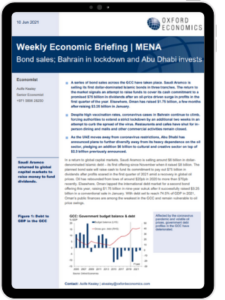
A series of bond sales across the GCC have taken place. Saudi Aramco is
selling its first dollar-dominated Islamic bonds in three tranches. The return to the market signals an attempt to raise funds to cover its cash commitment to a promised $75 billion in dividends after an oil-price driven surge in profits in the first quarter of the year. Elsewhere, Oman has raised $1.75 billion, a few months after raising $3.25 billion in January.
What you will learn:
- Despite high vaccination rates, coronavirus cases in Bahrain continue to climb, forcing authorities to extend a strict lockdown by an additional two weeks in an attempt to curb the spread of the virus. Restaurants and cafes have shut for inperson dining and malls and other commercial activities remain closed.
- As the UAE moves away from coronavirus restrictions, Abu Dhabi has
announced plans to further diversify away from its heavy dependence on the oil sector, pledging an addition $6 billion to cultural and creative sector on top of $2.3 billion previously announced. - In a return to global capital markets, Saudi Aramco is selling around $6 billion in dollardenominated Islamic debt – its first offering since November when it raised $8 billion.