Research Briefing
| Nov 8, 2024
Eurozone: Pension system sustainability hinges on unpopular reforms
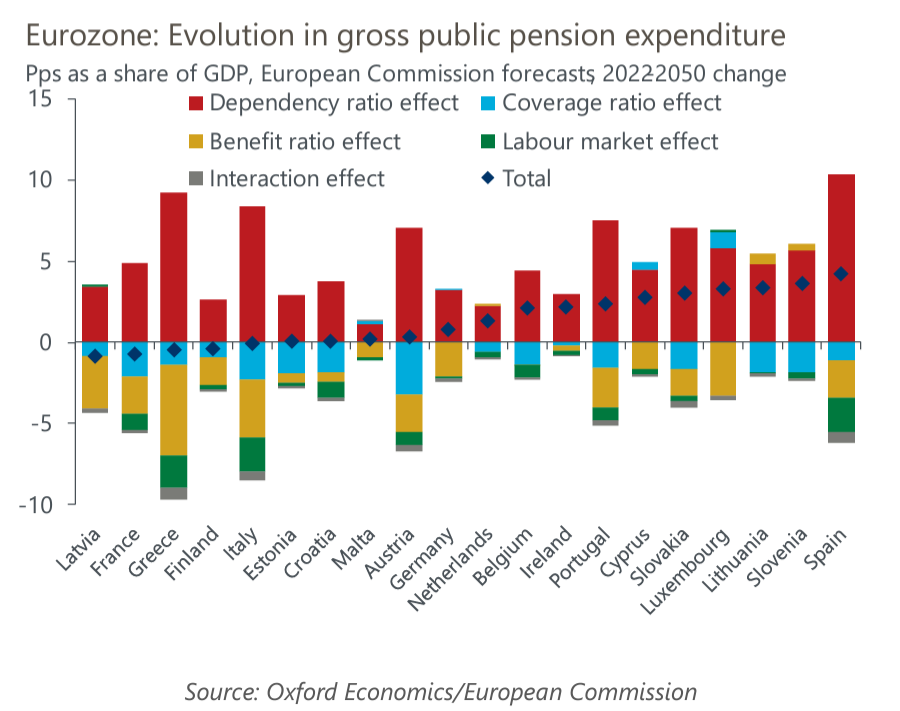
Increased spending to meet the needs of an ageing population jeopardises the sustainability of Europe’s public pension systems, based on current legislated measures. A better balance hinges on governments continuing with structural reforms and implementing those planned to ensure precious resources for public policies are not eaten away by pensions. The risks for debt and growth would be considerable if reforms are repealed due to their unpopularity.
What you will learn:
- Spain’s outlook is the most dire, as its net expenditure is projected to increase the most – more than 4ppts of GDP. We are sceptical that comprehensive new legislation enhancing the sustainability of its pension system will be implemented, given previous reforms have been reversed. The risks to public finances are also acute in Slovenia, Slovakia, and Luxembourg.
- Meanwhile, pension spending in Portugal, Belgium, Ireland, Cyprus, and Lithuania is projected to rise significantly, but we think that their outlooks are less problematic. The relatively benevolent projections for Italy and Greece hinge on past reforms, which should counter grim demographics. However, this does not imply optimal sustainability in these high-debt countries.
- Southern Europe is where scaling back reforms would harm the most. Not only would a lower retirement age drive up government spending due to more retirees, but also hamper growth prospects by restricting the labour force, compounding the impact of ageing.