
Research Briefing
| Oct 12, 2021
Eurozone | Recovery Tracker suffers a setback at end-September
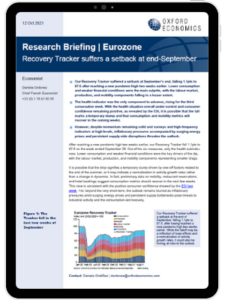
Our Recovery Tracker suffered a setback at September’s end, falling 1.1pts to
87.6 after reaching a new pandemic high two weeks earlier. Lower consumption and weaker financial conditions were the main culprits, with the labour market, production, and mobility components falling to a lesser extent.
The health indicator was the only component to advance, rising for the third
consecutive week. With the health situation overall under control and consumer confidence remaining positive, as revealed by the ESI.
What you will learn:
- Inflationary pressures accompanied by surging energy
prices and persistent supply-side disruptions threaten the outlook - Lower consumption and weaker financial conditions were the key drivers of the dip, with the labour market, production, and mobility components representing smaller drags
- It it is possible that the fall marks a temporary slump and that consumption and mobility metrics will recover in the coming weeks