Research Briefing
| Jan 24, 2025
Eurozone: Surveys have become less predictive; what can plug the gap?
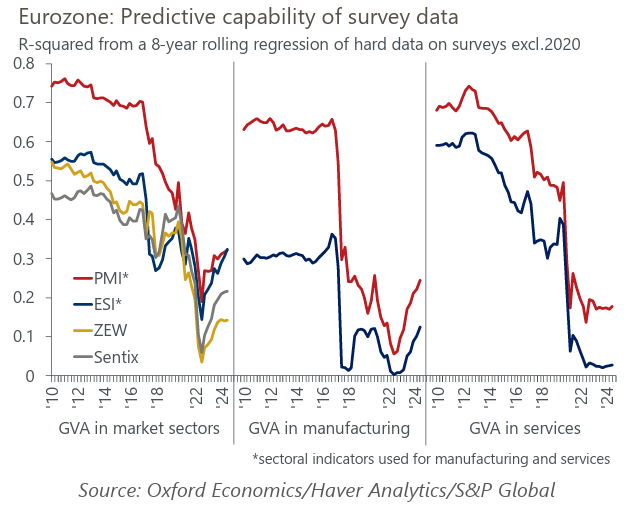
Surveys are a staple of high-frequency economic indicators, but they have become less reliable in predicting hard economic data like GDP growth. This feeds macro volatility – markets still interpret surveys such as PMIs essentially as reliable growth signals. The disconnect between survey and hard data can lead to mispricing.
What you will learn:
- While difficult to pinpoint, the disconnect likely stems from greater uncertainty ushered in by the pandemic, followed by a period of high inflation, frequent supply shocks, and increased geopolitical risk.
- The composite purchasing managers’ index (PMI) and the Economic Sentiment Indicator (ESI) remain the best predictors of headline growth, but their accuracy has fallen. The disconnect has been severe for consumer spending but mild for the labour market.
- Survey and other high frequency data remain useful in tracking economic activity, as they mitigate some of the shortcomings of standard macro data. We see particular promise in alternative data such as internet search data, electricity consumption or credit card transactions.
For more insights on the 2024 US Presidential Election, click here.