Research Briefing
| May 10, 2024
Eurozone: Why food prices are a channel for more frequent supply shocks
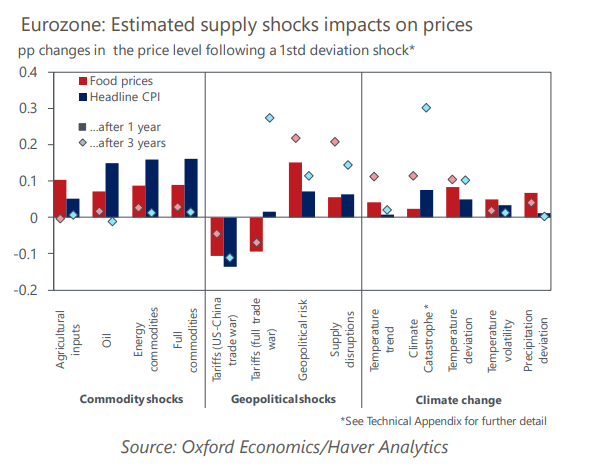
More frequent adverse supply shocks mean eurozone inflation is likely to be more volatile and possibly higher on average in the future. Food prices are a key channel through which these global shocks will be transmitted, according to our analysis. We provide a quantitative assessment of the impact of a wide range of supply shocks on eurozone inflation.
What you will learn:
- Climate change and extreme weather events are the most likely source of supply shocks. Droughts, floods, and other events have caused sharp spikes in prices for individual foods in recent years – these are likely to become more frequent. Slower-moving climate change effects will also put upward pressure on prices.
- Other threats include geopolitical risk, trade wars (potentially exacerbated by climate change), increasing near-shoring and regional self-sufficiency trends, and rising input costs. Another key supply shock trigger is more volatile energy and natural gas prices, which could lead to more volatile and higher food prices.
- Responding to more frequent adverse supply shocks poses a challenge to the inflation-targeting European Central Bank, already rattled by the recent bout of supply-driven runaway inflation. This challenge is made trickier by the non-linear pass-through of commodity prices.