In the media|15 October 2024
New Report from Oxford Economics Reveals Second-hand Clothes Stimulating Billions of Dollars for Economies in Latest Win for Green Growth
Johanna Neuhoff
Director of Economic Consulting, Continental Europe
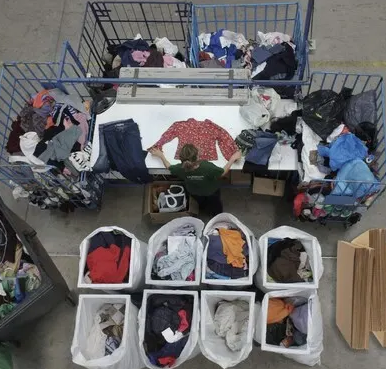
Second-hand clothing (SHC) is stimulating billions of dollars in GDP contributions and supporting hundreds of thousands of green jobs across Europe and Africa, a new report from Oxford Economics
This report is the first comprehensive analysis of the sector’s entire value chain and an attempt to quantify the sector’s socio-economic impacts across two continents. It addresses existing knowledge gaps, offering insights that were previously unavailable at this scale, focusing on the EU27+ and Ghana, Kenya and Mozambique.
Read the full article below:
Click here to download our latest report on our Resource Hub.
You may be interested in

We think generative artificial intelligence could add as many as 1.2 million jobs to the eurozone labour market by 2040. But the impact will be highly uneven across roles and sectors, making government action and structural reforms keys to mitigating the downside risks.

Labour markets are forecast to cool across the world’s major cities this year, marking the end of the Covid-19 catchup for some while others face the effects of demographic constraints. This trend of cooling employment growth is expected to largely continue over 2024–2028—with a few notable exceptions—but cities are still set to outperform their national economies.

We expect stronger activity in the eurozone in 2025, but growth will remain lacklustre as the consumer recovery lacks momentum. Monetary policy will become less restrictive, but fiscal policy will continue to drag on growth. External demand is set to improve, but prospects are prone to risks from rising protectionism. We anticipate GDP growth of 1.3% in 2025, slightly below consensus.

We expect APAC to outpace both Europe and the US in terms of spending in 2024 and 2025. However, there are risks ahead.