
Research Briefing
| Sep 19, 2022
The trade-offs of scrapping the spending cap post-election in Brazil
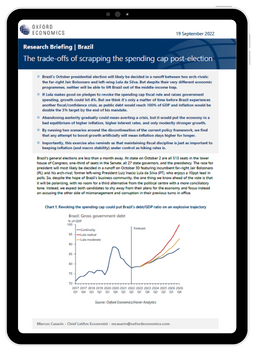
Brazil’s October presidential election will likely be decided in a runoff between two arch-rivals: the far-right Jair Bolsonaro and left-wing Lula da Silva. But despite their very different economic programmes, neither will be able to lift Brazil out of the middle-income trap.
What you will learn:
- If Lula makes good on pledges to revoke the spending cap fiscal rule and raises government spending, growth could hit 4%. But we think it’s only a matter of time before Brazil experiences another fiscal/confidence crisis, as public debt would reach 100% of GDP and inflation would be double the 3% target by the end of his mandate.
- Abandoning austerity gradually could mean averting a crisis, but it would put the economy in a bad equilibrium of higher inflation, higher interest rates, and only modestly stronger growth.
- By running two scenarios around the discontinuation of the current policy framework, we find that any attempt to boost growth artificially will mean inflation stays higher for longer.
- Importantly, this exercise also reminds us that maintaining fiscal discipline is just as important to keeping inflation (and macro stability) under control as hiking rates is.