
Why companies should prioritise their employees’ wellbeing


Employment is a fundamental part of life for many and directly links to their overall feelings of satisfaction and happiness. Recent studies, such as the comprehensive research conducted by the International Labour Organization (ILO), consistently highlight the positive association between employment and subjective wellbeing—the latter being how people evaluate their own lives. Across diverse demographics and geographic regions, individuals in employment consistently report higher levels of life satisfaction compared to their unemployed counterparts, highlighting the significance of meaningful work in enriching lives.
It is therefore incumbent on companies to ensure they support their employees’ satisfaction levels. One useful metric is subjective wellbeing, which measures how content we are as individuals, as a community, and as a nation. Coupled with traditional economic indicators, it allows us to gain a holistic understanding of wellbeing – and can send a signal about the need for action where subjective wellbeing in employment is low. The latest ONS Measuring progress, well-being and beyond GDP in the UK release—published on 9 May—shows that more than three in 10 adults in Great Britain are not satisfied with their job and nearly 40% of adults reported feeling unsatisfied with how they spend their time during the week. Additionally, in the US, only 1 in 4 workers strongly agree that their organisation cares about their wellbeing. Given such bleak results, now is a good time for companies to support the wellbeing of their workers.
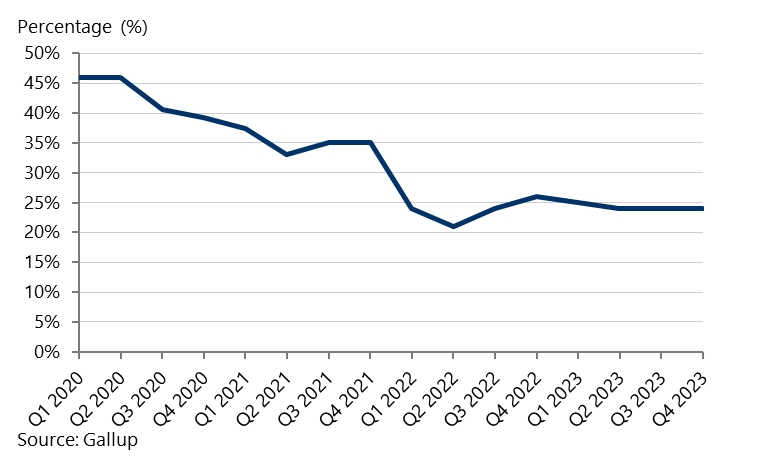
The first part of this is understanding the impact of the workplace, as the quality of employment influences subjective wellbeing outcomes. Beyond having a job, factors such as work-life balance and opportunities for growth play pivotal roles in shaping employees’ sense of wellbeing. Research indicates that individuals working in non-conducive work environments tend to experience lower levels of wellbeing, highlighting the need for wellbeing initiatives in the workplace.
To further this, the benefits of employment extend beyond individual wellbeing to societal welfare. Not only does employment foster economic stability and social cohesion but it also contributes to community resilience. By promoting inclusive labour markets and offering diverse employment opportunities, businesses can play a pivotal role in promoting collective wellbeing and addressing socioeconomic disparities.
Yet, improving employee wellbeing goes beyond just satisfying employees themselves. It is in the company’s best interests to prioritise staff wellbeing if they want to keep employees engaged and productive and help them achieve long-term business progress. Globally, US$322 billion of turnover is lost due to employee burnout, stressing the importance of a supportive work culture. What is more, a recent study found that the top 25% of brands with the highest employee engagement scores experienced higher profit margins by 4% than those in the bottom 25%. Companies can go about rectifying the situation by different means. Three-quarters of employees in one survey welcome being offered mental health days or a four-day work week.
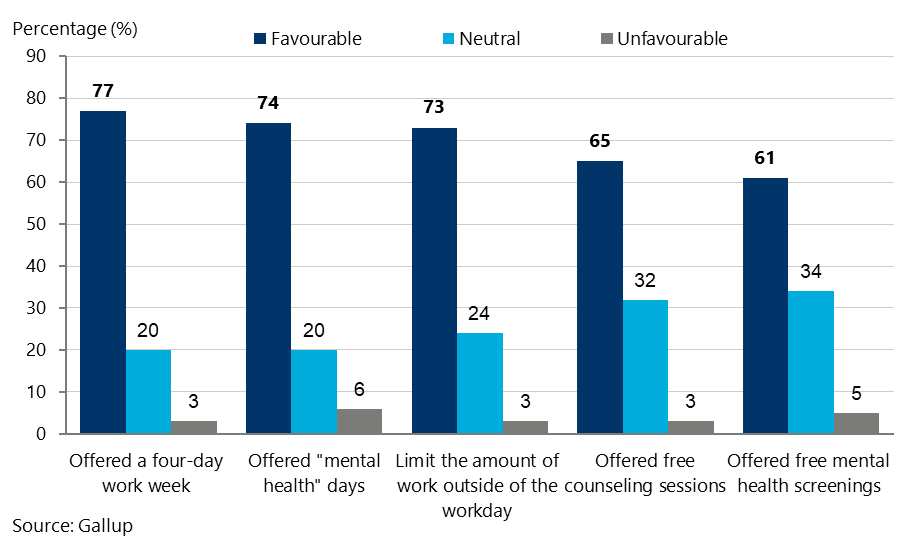
Overall, it is clear the employment companies provide emerge as a central determinant of national wellbeing. Research consistently indicates that employment plays a significant role in affecting health (evidenced by factors such as access to healthcare insurance), pension contributions, and the opportunity for skill development, among others. By prioritising policies and practices that are favoured by employees, businesses can chart a course towards a happier, more fulfilled, and resilient society.
Author

Tags: