
Research Briefing | Feb 11, 2025

日本化风险:下降,但并未消失

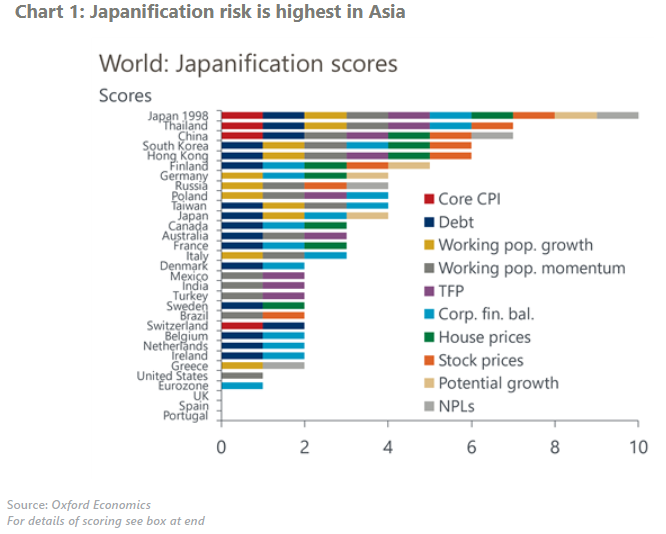
我们的最新分析显示,“日本化 ”风险——长期低增长、低通胀或通货紧缩——在中国等亚洲经济体有所上升,但在欧洲有所下降。不过,有些变化可能不是永久性的。在经历了大流行病的动荡之后,各经济体仍在逐步稳定下来,日本化的一些关键潜在驱动因素依然存在。

你将了解到什么:

  • 在多种因素的共同作用下,欧洲的日本化风险已经下降。大流行病期间的刺激性财政和货币政策打破了通货紧缩周期,劳动人口增长的短期趋势有所改善,银行和私营部门的资产负债表更加健康。但这种模式也有一些例外,最明显的是德国,其日本化风险上升。
  • 另一方面,由于房地产行业持续大幅下滑、鼓励供应过剩的政策以及极低的通胀率,中国的日本化风险有所增加。资产负债表衰退的迹象正在显现,就像 20 世纪 90 年代和 2000 年代的日本一样。泰国等亚洲其他地区也出现了类似的趋势。
  • 未来几年可能导致日本化风险上升的一个关键因素是人口结构,尤其是亚洲的人口结构。与其他一些观察家不同,我们并不认为社会老龄化是一个通胀因素。此外,潜在产出增长乏力和企业储蓄持续过剩也会增加日本化风险。
  • 总体而言,自 2019 年以来,我们衡量各经济体日本化风险的指标平均有所下降。不过,可以说这主要是运气而非设计所致,而且部分依赖于 2020-2021 年激进刺激政策的短期影响。欧洲等地区重回更严格的政策环境,可能会导致近期日本化风险的改善发生逆转。
Tags: China中国Asian EconomyDemographicsProperty sectorJapanificationEuropeDeflation riskInflation
Back to Resource Hub

相关文章

Asia Policy & Government Advisory Whitepaper: Policy in the driving seat

Asia Policy & Government Advisory Whitepaper: Policy in the driving seat

Asia remains one of the world’s most dynamic growth regions—but the forces shaping business outcomes are changing.
Shrinking supply delivery will support APAC CRE performance

Shrinking supply delivery will support APAC CRE performance

Commercial real estate development pipelines across Asia-Pacific are contracting structurally. Falling supply over the next two-three years is creating a window for operating fundamentals to improve.
The economics of data sovereignty and data localisation mandates

The economics of data sovereignty and data localisation mandates

As governments across Asia race to build digital economies, the question of where data lives has become one of the region’s most economically consequential policy debates.