
Research Briefing | Mar 20, 2024

出人意料的强劲工资数据终结了日本的 NIRP 和 YCC

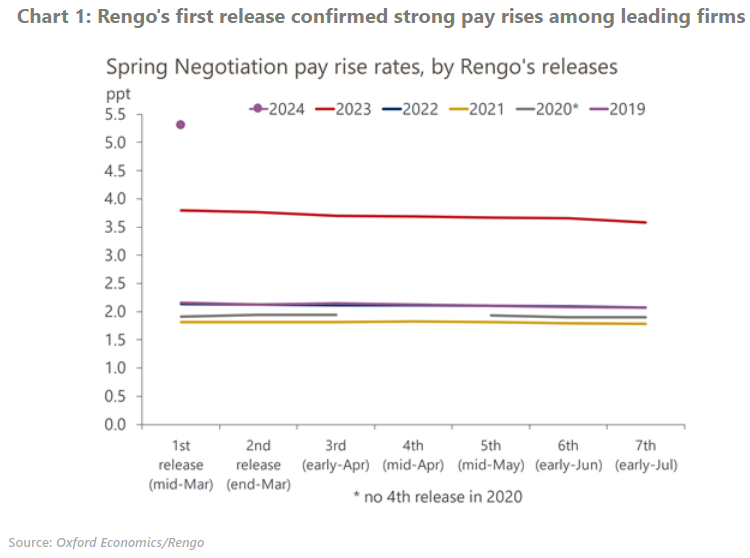
日本央行(BoJ)在周二的会议上决定结束负利率政策,并将隔夜市场利率的目标区间设定为 0%-0.1%,早于我们 4 月份的预期。 春季工资谈判(主要针对龙头企业)的首次统计结果出人意料地强劲,这使得央行对未来几年工资驱动的通胀目标(2%)充满信心。

你将学到什么?

  • 在第一次统计中,总体加薪率为 5.3%,远高于 2023 年的 3.8%和市场预期。 随着小型企业工资结算的公布,加薪率可能会下降,并趋近于 4.5%,即第一次统计的小型企业加薪率。
  • 为了引导市场对下一步政策举措的预期,政策声明称,”鉴于当前的经济活动和价格前景,世行预计目前将维持宽松的金融条件”。 我们预计日本央行将至少在未来一年内维持有效的零利率政策。
  • 日本央行还取消了收益率曲线控制框架,在 2023 年 10 月决定使其更加灵活之后,该框架日益流于形式。 为了避免长期收益率受到干扰,该行承诺暂时保持接近当前速度的日本国债(JGB)购买量,并承诺在收益率急剧上升时大幅增加购买量。
  • 日本央行在承诺通过购买日本国债继续实施量化宽松(QE)政策的同时,还决定正式停止购买 ETF 和房地产投资信托基金(REITs)等风险资产。 我们相信,日本央行将在今年晚些时候进行政策审查后,提出退出量化宽松政策的全面策略。
牛津经济研究院 (Oxford Economics) 是全球领先的独立经济预测及量化分析机构。基于领先的全球经济分析及行业分析模型,我们提供覆盖全球200多个经济体、100多个行业板块和8,000多个城市和地区的经济研究报告、预测及分析工具;并能够协助客户对市场走向进行预测,分析其对于经济、社会及商业的影响,为客户制定决策奠定坚实基础。


Tags: Japanese YenNIRPYCCAPACInterest ratesWage SettlementYenJapanBoJBank of JapanMonetary policyInflationFinancial markets
Back to Resource Hub

相关文章

Takaichi’s big win doesn’t affect the fiscal outlook for Japan

Takaichi’s big win doesn’t affect the fiscal outlook for Japan

The ruling Liberal Democratic Party's (LDP) landslide election victory on Sunday doesn't change our expectation of a primary fiscal deficit of 2%-3% of GDP in FY2026-FY2028 – we still see the deficit only starting to decline from FY2029. We also keep our view that the 10-year Japanese government bond (JGB) yield will be at 2.3% at end-2026 and 2.5% at end-2027 and beyond.
BoJ will need to do more because of fiscal expansion

BoJ will need to do more because of fiscal expansion

In our upcoming February forecast update, we'll stick to our expectation of a primary fiscal deficit of 2%-3% of GDP in FY2026 and FY2027, but now think it will remain at that level in FY2028, only starting to gradually decline in FY2029 and beyond.
Japan faces further BoJ rate hikes—but how much?

Japan faces further BoJ rate hikes—but how much?

The Bank of Japan (BoJ) kept its policy rate at 0.75% at its January meeting. Although our current baseline expects a final rate hike to 1% in mid-2026, the bank could move earlier if the yen weakens further.