
Research Briefing | Aug 15, 2024

日元波动:到目前为止只是全球市场的小幅震荡

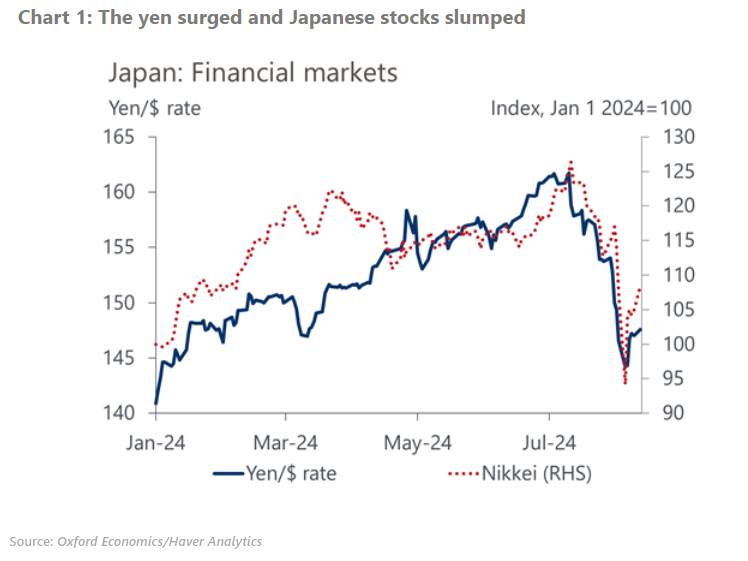
日元突然升值与全球金融不稳定有关,或者说是全球金融不稳定的前奏。到目前为止,最近的日元飙升对全球金融市场只产生了适度的溢出效应,应该不会对宏观经济产生重大影响。但这一事件并不一定已经结束,日元进一步升值的可能性是一个明显的风险。

你将了解到什么:

  • 在7月底和8月初的短短几天内,日元对美元升值了约7%。同期,日本股市暴跌 20%。加上一些疲软的美国数据,这在全球市场激起了涟漪。不过,全球金融市场已经收复了最初的大部分损失。
  • 将最近的波动与之前的日元飙升相比,我们发现最近的波动看起来比 1998 年的波动要小得多,1998 年的波动曾迫使美联储采取紧急行动。
  • 日元很有可能进一步走高。与美国的汇率差异表明,日元兑美元汇率应低于 140 日元/美元。长期估值指标表明,日元仍被低估。此外,历史经验表明,日元飙升可能会超过公允价值,进入高估区域。
  • 全球金融不稳定的一个可能渠道是,日元进一步大幅上涨导致套息交易平仓,套息交易规模可能高达 7,000 亿至 10 亿美元。这种平仓可能会导致市场参与者蒙受巨大损失,并引发其他资产的抛售,包括科技股等估值非常高的资产。
牛津经济研究院 (Oxford Economics) 是全球领先的独立经济预测及量化分析机构。基于领先的全球经济分析及行业分析模型,我们提供覆盖全球200多个经济体、100多个行业板块和8,000多个城市和地区的经济研究报告、预测及分析工具;并能够协助客户对市场走向进行预测,分析其对于经济、社会及商业的影响,为客户制定决策奠定坚实基础。


Tags: Interest RateInvestment returnsJapanese YenJapanUnited StatesStocksFiscal policyAsset pricesFinancial markets
Back to Resource Hub

相关文章

Takaichi’s big win doesn’t affect the fiscal outlook for Japan

Takaichi’s big win doesn’t affect the fiscal outlook for Japan

The ruling Liberal Democratic Party's (LDP) landslide election victory on Sunday doesn't change our expectation of a primary fiscal deficit of 2%-3% of GDP in FY2026-FY2028 – we still see the deficit only starting to decline from FY2029. We also keep our view that the 10-year Japanese government bond (JGB) yield will be at 2.3% at end-2026 and 2.5% at end-2027 and beyond.
BoJ will need to do more because of fiscal expansion

BoJ will need to do more because of fiscal expansion

In our upcoming February forecast update, we'll stick to our expectation of a primary fiscal deficit of 2%-3% of GDP in FY2026 and FY2027, but now think it will remain at that level in FY2028, only starting to gradually decline in FY2029 and beyond.
Timid budget for 2026 doesn’t wish away fiscal risks for Czech Republic

Timid budget for 2026 doesn’t wish away fiscal risks for Czech Republic

Despite the new government's 2026 budget being slightly more timid than anticipated, we don't plan major changes to our outlook. However, this doesn't mean the government will show fiscal restraint in the coming years. A smaller deficit will slow but not halt the rise in bond yields in 2026, as markets price in higher current spending-driven borrowing and relaxed fiscal rules.